Labels

Wednesday, 11 September 2013

Why Go to Church? / The Main Thing / Body Builders


Why Go to Church?

Here are some reasons that people might want to go to a church community. They’re in no particular order. You might like to decide if they are valid or not, or in what order of priority they should be placed. Perhaps you might like to brainstorm some other reasons that I haven’t included :


We are told in the Bible to meet together. (Hebrews10:25)

To honour God.

To worship God in the company of other believers.

To be a witness to the unsaved and draw others into God’s kingdom, fulfilling the Great Commission

To learn more of God and His ways through Bible teaching.

To celebrate communion together with other believers.

To enjoy singing and music with other voices/instruments in unison.

To lift our prayers to God as a group.

To be prayed for and to pray for others’ needs individually.

To give and receive Godly counsel.

To be involved in ministries where our talents can be appreciated, recognised, utilized and developed.

To help our children and youth to be nurtured and developed into Godly men and women.

To reach out as a group to the unsaved in ways that would not be possible individually.

To be equipped for witnessing in other spheres of life beyond the church building.

To share fellowship with other Christians.

To receive care in times of need.

For encouragement.


The Main Thing

“The main thing is to keep the main thing the main thing.” Stephen R. Covey

Why do churches exist? Why do we attend church communities? What is their purpose? How effective are they in this purpose?
How do we "do" church? How do we keep order from becoming ritual? How do we maintain simplicity, space, creativity and cooperation and avoid a never- ending spiral of programs, busyness, and ego-driven competition?

What does Jesus say?

"Little children, I am with you a little while longer. You will seek Me; and as I said to the Jews, now I also say to you, 'Where I am going, you cannot come.' A new commandment I give to you, that you love one another, even as I have loved you, that you also love one another. By this all men will know that you are My disciples, if you have love for one another." John 13:33-35

“Therefore go and make disciples of all nations, baptizing them in the name of the Father and of the Son and of the Holy Spirit and teaching them to obey everything I have commanded you. And surely I am with you always, to the very end of the age. ” Matthew 28:19.20 (As recorded in Matthew, Christ's last words to His followers before He ascended into heaven - the "Great Commission")

Love God and love one another, and keep focused on reaching out to the ones who don't yet know Him. That’s enough of a main thing for me.


Body builders.

There was once a man, whose name was Sam. Sam decided he would enter the Mr World competition. He worked hard to achieve his goals. He rose every morning early and went to the gym. He exercised with weights and ate healthy food. He listened carefully to his gym instructor and read and studied everything he could on body building. At the end of a long training period, Sam entered the contest, and to his delight, he won a bronze medal. He’s continuing to train hard for the next event where he hopes to gain a silver medal or even the coveted gold trophy.

There was another man and his name was Dan. Dan too was a hard worker. He got up every morning and was out in the fields ploughing, planting, watering and weeding. He consulted with some of the experts in agriculture to determine the best use of his land. He read all he could about farming. He ate healthy food.  At the end of a long summer the crops were harvested, and to Dan's delight he had plenty to feed his family and enough to share with others who had little, because he’s a kind hearted fellow. He's hoping for an even larger crop next time.

When people meet Dan and Sam, they sometimes get confused, because they’re identical twins.


Saturday, 7 September 2013

The Cross


The cross is arguably one of the most recognised symbols on this earth. It's a symbol, a reference point for Christians and we worship the One who died on the cross, not the cross in itself. Catholics tend to depict Christ on the cross - they of course believe in His resurrection, but choose to highlight the passion, or suffering of Christ and focus strongly on the cost that was borne for our salvation. Protestant churches tend to use a plain cross symbol, highlighting the fact that Christ was taken from the cross and rose again from the dead. Either way, we rejoice in the fact that death could not hold our Lord. What was a feared instrument of torture has become a symbol of Christ's lordship.

It is only through repentance and faith in Jesus Christ, the One who died on the cross, that we as sinners can come to a personal relationship with God:

"Salvation is found in no one else, for there is no other name under heaven given to mankind by which we must be saved.” Acts 4:12

" Thomas said to him, “Lord, we don’t know where you are going, so how can we know the way?”
  Jesus answered, “I am the way and the truth and the life. No one comes to the Father except through me" John 14:5,6 

Many churches have a cross at the front of the congregation, some central and high on the wall , symbolising  that everything in that church is at the foot of the cross. Some have a standing wooden cross. It serves as a reminder of the price paid for the blessings that we enjoy. It may also serve to help the congregation to focus on God, rather than the worship team or the pastor. I particularly like to focus on the cross when taking communion. 

One interpretation of the symbol of the cross which I like is that it symbolises God's love in two ways: the upright beam shows us that the cross made a path from God to mankind. He is our head and we kneel at His feet. The height and depth of His love is boundless. The horizonatal beam demonstrates the open arms of God, almost in a welcoming gesture, an invitation to be embraced by his love. The width of His love embraces the whole world. It invites us to not only be reconciled to God, but to love one another and be reconciled to one another. In a world of fractured and strained relationships, the power of God's love and the grace that only He can give may be the only possible way this can be achieved.

Father God, we give You all the praise and honour that is Yours alone. Thank You Father, that in Your great love You sent Your Son, Jesus Christ to die on the cross, honouring You and making a way for sinful people to come into right relationship with You, only through repentance and faith in Jesus Christ. When we see the cross, may it remind us to love and serve You Father, and to love one another as You have first loved us. Amen

Sunday, 25 August 2013

Feeling alone in church


Within the body of Christ there are very many different personalities – after all, our Creator made us each individuals, each with our unique gifts and characteristics. Many humans bear similarities, but no two are completely alike.
We, as Christians, are in a sense “called out” of this world and set apart for a life of service to God and others. God tells us in His word, the Bible, that we are to serve Him not only individually, but as a community of believers, His church – the body of Christ. There is only one body, but many different communities. There is only one body, but many different elements and functions within that body.
Church congregations are very interesting in the amount of personal authenticity that they allow. This is a cultural aspect which sometimes, I believe, follows the prompting of the Holy Spirit rather than being orchestrated by leaders. What I mean by personal authenticity is the ability of an individual to be real about their past, their struggles, their state of mind and their walk with God.
Too many people are into the mindset of putting on their best clothes and happiest mask for church on Sunday. Naturally, to do otherwise is to be vulnerable, to risk offence and hurt and to perhaps end up feeling even more isolated. But on the other hand there may be genuine listeners and pray-ers out there who will come alongside and encourage.
God calls us out of the world, and in my thirty-something years in a few different church congregations, I’ve become aware of some, who, for one reason or another, seem to be called out of the church. Let me elaborate- I do not mean that God calls anyone to leave and cease attending churches. On the contrary the writer of Hebrews warns “ Don’t stop meeting together with other believers, which some people have gotten into the habit of doing. Instead, encourage each other, especially as you see the day drawing near.” Hebrews 10:25. No, the people I am talking about are those who, even in a church congregation, are almost set apart from others by their differences.
These differences may be easily observed, such as a physical or mental disability. A person may be of a different race or ethnic background. Or the differences may be more internalised. A person may have spent their entire life feeling guarded and marginalised because of family circumstances, addictions and secrets.
I believe that this is part of the message in the phrase “Many are called but few are chosen” in Matthew 22. The wedding feast is shared with the outcasts. God in His wisdom does not see people in quite the same way as the world. He loves the broken. He uses the marginalised. He takes those who feel dirty and shameful on the inside and says to them “You’re transformed. You’re washed clean. You’re my bride.” Throughout the gospels we see Jesus being approached by those who were regarded as the dross of society. They never left without being changed, healed, and used by Him to spread the good news.
It’s no small thing to feel set apart in a church. A friend of mine spent many years praying that her son would find one good friend within a church congregation. Despite their prayers and his efforts, he found it very difficult to socialise and did not have a genuine friend. Yet I believe that through this experience that young man will clearly know Jesus as a steadfast friend and will be a mentor to young men further down the track.
Another lady I know was abandoned by her husband and has struggled to raise her children in difficult circumstances, including church hurt which has made her wary of trusting others. Yet she continually testifies to the provision and presence of Jesus in her life, is faithfully attending church services and has a strong evangelical heart for the unsaved.
I know a number of disabled young people who, even in churches, feel isolated. Yet God gives them a sense of His presence and often this is accompanied by a deep sense of their own worth. They need it.
Blessed are those church congregations that strive to be inclusive, that have folk who look out for the ones who don’t fit easily. We all like to feel we belong and have friends.
And very blessed indeed are those who have come to the realisation that they can hold their head high, walk into a crowded auditorium, sit anywhere and chat to whoever and not care particularly much whether they are accepted or rejected by the crowd – because the King of Kings and Lord of Lords is their Saviour, friend, Counsellor and guide. Their worth is found in Him.

I no longer call you servants, because a servant does not know his master’s business. Instead, I have called you friends, for everything that I learned from my Father I have made known to you.” John 15:15


Saturday, 17 August 2013

A debt of gratitude


Aussies love our sport, and here in Adelaide we were interested to see the redevelopment of the Adelaide Oval. "The Don" had to be photographed from afar, as his statue is currently surrounded by construction fencing.

Across the road from this new development is a park with a statue of another Australian hero. Daily thousands of commuters pass by the figure of John Simpson Kirkpatrick and his donkey. Jack Simpson, as he is commonly known, was a young field ambulance stretcher bearer who carried wounded soldiers to safety on his donkey during the Gallipoli campaign. His cheerful demeanour. courage under fire and devotion to duty was exemplary. He was killed at Gallipoli, aged just 22.


Jack Simpson has come to epitomise the men and women who gave their lives that we might enjoy the freedom and all the good things in life that we have today- including cricket. They follow the example of our Lord Jesus, who said:

"..the Son of Man did not come to be served, but to serve, and to give his life as a ransom for many." Matthew 20:27

"Greater love has no one than this: that he lay down his life for his friends." John 15:13

Wednesday, 14 August 2013

Recharging the batteries

Wang Wang....definite awwww factor


Have just returned from Adelaide, South Australia, where I spent an interesting week with my family enjoying the sights. The creatures in the zoo, including the only two pandas in the Southern hemisphere, reminded us of how amazingly beautiful and intricate God made His creation. We visited many historic spots and buildings. As an art lover, I revelled in the opportunity to view the originals of some of Hans Heysen’s works, as well as visit the locations where he painted, including the Bluff at Victor Harbour. We visited the Barossa Valley and sampled some of the local wines.

Adelaide is known as the city of churches and proudly displays many picturesque church buildings which are interesting to view. But the church is far more than buildings. It’s the people of God everywhere, being the church, built on the cornerstone, Jesus, demonstrating His love, power, kindness and grace. While I was away I read the book “Heavenly Man” by Brother Yun with Paul Hathaway (Monarch Books, 2002), the story of Brother Yun’s life in China, the persecution faced by Christians for their faith and the growth of the church through house churches there. It was a powerful reminder of the privilege we possess in freedom of worship in the west, a challenge to materialism and a reminder of our dependency upon relationship with Christ.

One of the reasons for our visit to Adelaide was for my son Tom to attend the Asia Pacific Autism Conference held at the Adelaide Convention Centre. Along with twenty plus young people with Autism Spectrum Disorder, Tom was invited to participate as part of a group of “Future Leaders”- young adults who have demonstrated their ability to not only live with the syndrome but to be advocates for those others with a disability. Tom demonstrates that it is possible to live with a severe disability and still achieve an education, work and aspire to personal goals. His faith is a major component of his life. The theme of the conference was “True Colours” and it was absolute joy to see the young people connecting with other young people and just enjoying life as all young people should, as well as us parents to briefly enjoy the camaraderie that comes with mixing with others who understand.

Both my husband and myself have an interest in advocacy for autism and connecting with parents in a role of mutual support, and if you have any further interest I invite connection through my email address on this page.

I am so proud of both my sons. Rob, my younger son, is a modest and quiet young man, a deep thinker, one of the smartest young people I know, and a deeply insightful writer. He is engaged to be married next year to a lovely Christian young lady, Elissa. Parents naturally have so many dreams and desires for their children, but what I wish for mine is that they will always stay firm and grow in their Christian faith, and that faith will give them a sure foundation for their own knowledge, wisdom and self-confidence throughout their lives.  

A few snapshots from the week that was:
Tom and I
Rob at the Coorong, where the Murray River, in background, meets the sea.
Tom, Wayne and Rob
Family portrait, Flinders Street mall
Taken from the Bluff at Victor Harbour. Encounter Bay, where Matthew Flinders encountered the French navigator Nicholas Baudin.  Hans Heysen painted his landscape "Petrel Cove" near this spot.
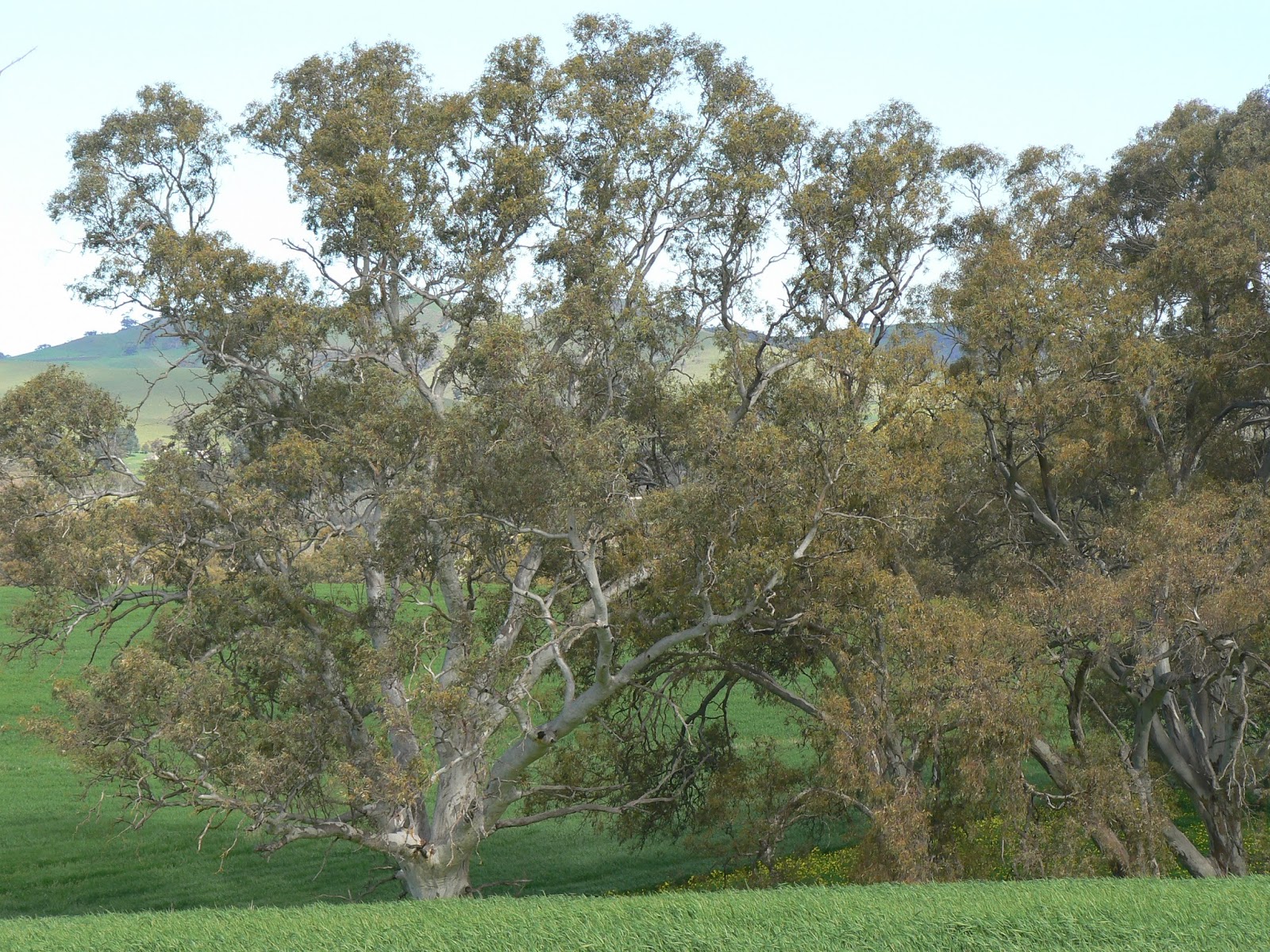
Eucalypts, Barossa Valley
Funi

Monday, 29 July 2013

Book Review: “Wired for Intimacy. How pornography hijacks the male brain.” by William M. Struthers. Inter Varsity Press 2009.


Most of us who use the internet are only one or two keystrokes away from viewing pornography. Whether it be accessing a search engine, watching a sports video clip or reading a newspaper online, in subtle or not so subtle ways, we are invited to click onto links which will direct the viewer to more and more explicit imagery.  With the advent of the internet, the world has now more accessible pornography than has ever been available in history.

Many of us have made the decision to never go there. But others struggle with temptation and some may be struggling with a silent, secret addiction. Like all addictions, what may have begun as a “harmless” bit of fun has taken on a life of its own. Like gambling, food addictions and drugs and alcohol, pornography destroys the person dependent upon it and shatters their relationships, especially marriages.

One of the saddest aspects of the saturation of our western cultures with pornography is the easy access for children via the computer into areas which should be off-limits. The innocence of childhood is destroyed. Children and teenagers may enter their young adult years having viewed thousands of images and video clips. The resulting problems when these people enter marriage are only just becoming to be realised by sociologists and psychologists.

William M. Struthers has written a book for our times on the subject. Whilst it is primarily addressed to men, women too will find much information to enable them to understand the nature of the problem. Dr Struthers is a psychologist with expertise in behavioural neuroscience and addictions, and a committed Christian.  The book is dedicated “To every man who longs to be holy and good.”

“Wired for Intimacy” is an unusual book in that it combines what is often found in isolation. There are other books which present the problems of pornography from a physical viewpoint, and ones which discuss the spiritual implications, but this book gives a synthesis of the two, without becoming preachy or bogging the reader down in voluminous medical terminology.

The reader is given a comprehensive overview of the biological patterns in the brain which are formed by pornography use. The book provides an outline of the physical areas of the brain and the chemicals which impact on mood. It helps to explain compulsions and impulses and how these can be controlled and changed.

Doctor Struthers then discusses some of the psychological and spiritual factors which are both impacted by addictions and help to overcome them. The reader is invited to contemplate some wide ranging questions regarding the nature of masculinity and true human intimacy.

Some useful websites which assist with recovery from online pornography and sex addictions are included as an appendix.

As a woman, wife, mother of two sons and community health worker, I enjoyed reading “Wired for intimacy.” It is an excellent counselling resource and provided me with much to contemplate regarding the nature of relationships. There are many parallels within the book to the questions that women ask themselves regarding femininity, and overall, the same need for self-respect, knowing and being known, and validation is found in both sexes. But most of all I hope that the book will help the men who read it to become the men, husbands and fathers that God intends for them to be.

“Biblical, redeemed, true masculinity gives freely of its gifts, surrendering itself for the benefit of others, not just itself. It affirms, admonishes and brings peace and order. It does not condemn, dominate or bring chaos. As Christians, we reject the culture’s corrupted understanding and celebration of biological and fallen masculinity. We reclaim a right understanding of our created masculinity and offer a vision of an embodied, redeemed man of God anchored in the incarnation of Christ.” Wired for intimacy, p.153


Monday, 15 July 2013

Altar Call


There was a church in a inner city neighbourhood of a US city which had experienced a period of growth in its congregation and blessing upon the ministry efforts of the pastoral team. As part of their approach to conducting church services, the minister decided, amongst other changes, to have regular "altar calls" at the end of a service. At these times people would be asked if they wished to accept Jesus Christ as their personal Saviour, or if they wished to rededicate their lives to Christ. At other times a pastor might ask if people who had been prompted by the particular topic of the sermon to come forward for prayer.
The first week, when the pastor asked for anyone who wanted to commit themselves to Jesus to come forward during the final hymn, an elderly man who regularly attended services shuffled to the front for prayer and rededicated his life.
The next week’s sermon revolved around missions. The minister asked if anyone who was considering mission work could come forward for prayer. The elderly man stepped forward again.
At the end of the following week’s service, the minister asked if anyone would like to accept Jesus as their Saviour, or rededicate their life to Christ. Again the elderly man stepped to the front.
So it continued. Each time there was an altar call, the old man rose quickly and went forward. Some of the congregation began to whisper and giggle each time. Finally one of the pastors decided to speak with the gentleman about his actions.
The following Sunday the minister once again gave an invitation for anyone who did not know Jesus as their personal Lord and Saviour to come forward during the final hymn for prayer. Again the old gentleman rose quickly and stepped forwards
This time, before praying, the pastor gently led the old man to a quiet pew on one side. “George,” said the pastor “I’m always happy to pray for you, but you know that you’re saved. You’ve accepted Jesus as your Saviour. I know how much you love Him. Don’t think that you need to keep coming forward to accept His gift.”
Tears filled the old man’s eyes. “You’ve got it all wrong, Pastor.” he said. “Let me tell you why I come forward. Years ago, when I was a young man and first started going to a church, I wanted very much to ask Jesus to become my Saviour. Week after week the pastor would ask if anyone wanted to receive Jesus, just step forward. And week after week I wanted to, but was too scared. I just sat there. Then one week, another man got up and went forward, and I thought, well, if he can get up so can I. So I did.
That was a long time ago. Receiving Jesus as my Saviour was the best thing I ever did. And it might have taken me a lot longer if it hadn’t have been for that other man. So that’s why I get up now.
I want to be that other man for somebody else.”


(Storyteller's note: this is not my fabrication but a true story I heard about twenty years ago. Like all stories that are retold, some of the details may have changed slightly in the telling, but the message is essentially the same. I retell it here because it is a story that moved me profoundly at the time and has stuck in my memory.)